
Designing the future of cross-retailer fashion shopping
Leading UX for a seed-stage startup by transforming an ambitious concept into investor-ready prototypes for a browser extension and augmented shopping experience.
Role: UX Intern → Lead UX Designer
Company: Piqi
Duration: Aug 2022 – Dec 2022
Team: CEO, Developers, Marketing, UX Designer
Industry: Fashion Tech / E-commerce Startup
Platform: Sharepoint
Tools: Figma, Sharepoint Editor
Deliverables: UX Strategy, Wireframes, User Flows, Interactive Prototypes, Design System
1. Overview
Piqi is a fashion technology startup aiming to simplify how people discover, compare and purchase clothing online.
Instead of shopping across multiple retailers separately, users could save products from supported fashion websites into one personal wardrobe using a browser extension. From there, they could compare products, create outfits, explore sustainability information and ultimately purchase items through a more unified experience.
I joined Piqi as a UX Intern and progressed to Lead UX Designer, working alongside another UX designer and collaborating closely with the founder, developers and marketing team. As the product evolved, I took increasing ownership of the UX direction, user journeys, interaction design and prototyping.
My work focused on turning an ambitious early-stage product concept into a clear, tangible experience that could be communicated to both the development team and potential investors during the company's seed funding stage.
The Challenge
Online fashion shopping is fragmented. Users often browse multiple retailers before deciding what to buy, making it difficult to compare products, organise saved items, visualise outfits and understand information such as sustainability or resale value.
Piqi's challenge was to bring these disconnected behaviours into one experience without making the product feel overwhelming.
Rather than simply creating another fashion marketplace, we explored a new shopping workflow centred around the user's wardrobe rather than individual retailers.
My Role & Responsibilities
Lead UX Designer
I was responsible for:
Leading UX direction across the product
Designing end-to-end user journeys
Creating low- and high-fidelity wireframes
Developing interactive Figma prototypes
Exploring information architecture and navigation
Working alongside developers to consider technical feasibility
Refining concepts through design reviews
Preparing investor-ready product demonstrations
My role developed significantly throughout the project, progressing from UX Intern to Lead UX Designer as I took on greater responsibility for product and design decisions.
2. Discovery
Understanding the Opportunity
Working closely with the founder and design team, we explored how people currently shop across different fashion retailers and where the existing experience became fragmented.
Our exploration focused on:
Existing online shopping habits
Fashion wishlisting behaviour
How users discover and save products
Cross-retailer purchasing pain points
Existing competitor experiences
Opportunities for a more unified shopping journey
These conversations helped shape the initial information architecture and define the core journeys Piqi needed to support.
From Retailers to One Wardrobe
A key opportunity emerged around the idea of moving the user's focus away from individual retailer websites.
Instead of users thinking:
“I'm shopping on Zara.”
or:
“I'm shopping on H&M.”
Piqi could allow them to think:
“I'm building my wardrobe.”
This became the foundation for the product experience.
Rather than treating each retailer as a separate destination, products from different websites could be brought into one consistent environment where users could save, compare, style and eventually purchase them.
3. Defining the Experience
Defining the Core Journey
We structured the experience around four connected stages:
Save
Users could save clothing items from supported online retailers directly into Piqi using a browser extension.
Instead of maintaining separate wishlists across different websites, products could be collected into one unified wardrobe.
Compare
Products could then be compared across multiple dimensions, including:
Price
Material composition
Colour
Brand sustainability
Estimated resale value
This expanded comparison beyond simply asking which item was cheapest.
Style
Users could drag and drop clothing into a virtual fitting room to create complete outfits.
This allowed products from completely different retailers to be combined, giving users a way to experiment with potential purchases before committing to them.
Buy
Once users were happy with an outfit, items could be added to a combined shopping bag.
The longer-term vision was to reduce the friction of purchasing from multiple retailers by bringing the experience together into one streamlined journey.
Designing for an Early-Stage Product
Because Piqi was a seed-stage startup, the product was still being validated.
The goal wasn't simply to create production-ready screens. We needed to make the product vision tangible enough for developers, stakeholders and potential investors to understand.
Each experience therefore needed to communicate:
User value: Why would someone use Piqi?
Business opportunity: What problem could the product solve?
Technical feasibility: Could the proposed interactions realistically be built?
Future scalability: Could the experience grow beyond the initial concept?
This balance shaped many of the UX and interaction decisions throughout the project.
4. Design
From User Journeys to Interface
Once the core journeys were established, I translated them into user flows and wireframes.
The early design process focused on structure and interaction rather than visual polish. I explored how users would move between their wardrobe, saved products, comparisons, fitting room and purchasing journey before developing higher-fidelity concepts.
This allowed us to identify potential friction and refine the experience before committing to detailed UI design.
Wireframing
I created low- and high-fidelity wireframes to explore:
Navigation and information architecture
Wardrobe organisation
Product comparison
Outfit creation
Product information
Shopping bag interactions
The emphasis was on creating a coherent journey across multiple product features rather than designing each screen in isolation.
Prototyping
High-fidelity interactive prototypes became one of the main communication tools throughout the project.
Rather than showing investors a collection of static screens, we could demonstrate how the product would actually work.
The prototypes demonstrated journeys including:
Saving products through the browser extension
Managing a personal wardrobe
Comparing clothing
Creating outfits
Exploring product information
Adding items to a combined shopping bag
These prototypes helped turn an abstract startup concept into something stakeholders could interact with and understand.
Key Design Challenges
Creating consistency across retailers
Each retailer presents product information differently.
Piqi needed to bring these products into a consistent structure while still retaining information users would recognise from the original retailer.
This meant thinking carefully about how product information could be standardised across different sources.
Managing complex information
Users could potentially see pricing, materials, sustainability information, resale value and other product details.
Displaying everything at once risked creating unnecessary cognitive load, so information needed to be prioritised and progressively revealed depending on the user's needs.
Designing the Fitting Room
The fitting room was intended to be more than another shopping interface.
It acted as a creative workspace where users could experiment with different clothing combinations before deciding what to purchase.
The challenge was to make interactions feel engaging and playful while keeping the underlying experience intuitive.
Design System
I also contributed to the design system and reusable UI patterns, helping maintain consistency across the product and making it easier to iterate as the concept developed.
This became particularly important as the product expanded across multiple connected journeys.
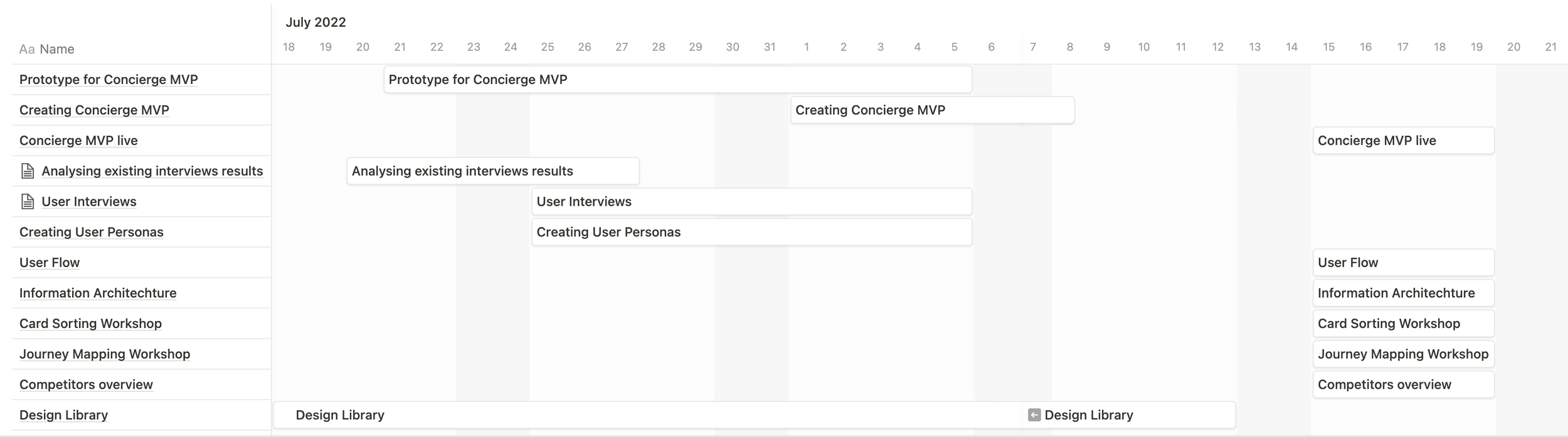
Roadmap for concierge MVP
“Select” button functionality
“Create A Look” functionality
5. Validation
Communicating the Product Vision
Because Piqi was still at the seed stage, validation focused heavily on communicating and refining the product concept rather than measuring a live production product.
Interactive prototypes allowed the team to walk through proposed experiences, identify areas that needed refinement and demonstrate the product vision to potential investors.
I worked closely with developers throughout this process to ensure proposed interactions could be translated into realistic product experiences.
Outcome
By the end of the project, I had:
Progressed from UX Intern to Lead UX Designer
Led UX direction across the product
Defined user journeys spanning multiple retail platforms
Produced high-fidelity interactive prototypes
Explored information architecture and interaction design
Collaborated closely with developers on implementation feasibility
Created investor-ready demonstrations for seed-stage fundraising
Helped communicate and refine the overall product vision
The project gave me experience working within the uncertainty of an early-stage startup, where UX decisions needed to balance user needs, business opportunities and technical constraints.
6. Reflection
What I Learned
Piqi was one of my earliest experiences of taking significant ownership of a product's UX direction.
Starting as a UX Intern and progressing into the Lead UX Designer role taught me how to move beyond designing individual screens and think more holistically about product journeys, information architecture and the relationship between different parts of an experience.
Working in a seed-stage environment also taught me that UX isn't always about designing a finished product. Sometimes the designer's role is to make an idea tangible enough for a team to challenge, develop and communicate.
The project strengthened my ability to:
Lead UX decisions in an ambiguous environment
Translate an early product idea into structured user journeys
Balance ambitious product concepts with realistic interactions
Design across interconnected experiences
Communicate UX decisions to both technical and non-technical stakeholders
Use prototyping as a tool for exploration, validation and communication
Skills Demonstrated
UX Leadership · Product Strategy · Information Architecture · User Journey Mapping · Wireframing · Interaction Design · Prototyping · Design Systems · Cross-functional Collaboration · Startup Product Design · Investor Communication