
Designing a safer gaming experience for women
UX research, interaction design and prototyping for a Steam extension that helps women identify safer multiplayer communities and make informed gaming decisions.
Role: UX Designer
Project: Final-year University Project
Duration: Aug 2022 – Dec 2022
Industry: Gaming
Platform: Browser extension / Steam
Tools: Figma, FigJam, Miro
Deliverables: UX Research, Personas, User Flows, Wireframes, Prototyping, UI Design, User Testing
1. Overview
GG EXP (Girl’s Gaming Experience) was my final-year UX Design project exploring the experiences of women who play online video games.
While gaming communities can provide entertainment and connection, my research highlighted recurring issues around gendered harassment, feeling excluded, anxiety about speaking up and difficulty finding other women to game with.
I designed GG EXP as a browser extension concept that works alongside Steam, bringing together emotional check-ins, personal insights, resources and a dedicated community space. The aim was to create an experience that supports women during and after gaming, rather than expecting them to navigate these issues alone.
The Challenge
Women who experience harassment or discomfort while gaming often have to deal with the problem across disconnected platforms (gaming communities, social media, forums and messaging apps.)
I wanted to explore:
How might we create a more supportive and inclusive experience for women who game online?
The challenge was not simply to create another gaming community. It was to understand what women actually needed before, during and after negative experiences online, and translate those needs into a product that could fit naturally into their existing gaming habits.
My Role
I was responsible for the project end-to-end, including secondary research, synthesis, persona development, ideation, information architecture, interaction design, prototyping and user testing.
2. Discovery
Understanding Women’s Experiences in Gaming
I began by investigating the experiences of women within contemporary gaming communities through secondary research and exploration of existing online spaces.
I looked at academic research alongside communities and platforms where gamers already interact, including Reddit, Discord, Instagram and university gaming communities.
Several recurring themes emerged:
Online harassment
Gender stereotypes
Feeling excluded or out of place
Difficulty finding people who can relate
Anxiety about speaking up
The need for safer, more inclusive spaces
Rather than treating harassment as an isolated problem, I began looking at how it could affect the wider gaming experience — from whether someone feels comfortable speaking in-game to whether they choose to play at all.
From Research to Questions
The research helped me narrow a broad topic into more focused questions:
How do women in gaming feel online?
Why is there inequality around gender in gaming?
How can harassment in gaming be alleviated?
Why are women still not treated equally within gaming spaces?
How can women be encouraged to continue playing despite gender stereotypes?
This shifted the project from simply asking “How do we stop harassment?” to considering how a digital product could provide ongoing support around the experience.
Identifying User Needs
I also explored the common problems women described experiencing and the types of solutions that could potentially address them.
The strongest opportunities centred around:
Connection
Finding other women who understand their experiences.
Support
Having somewhere to turn after a negative interaction.
Reflection
Understanding how different gaming experiences affect mood over time.
Validation
Knowing that their reactions and experiences are legitimate.
Personas
The research informed two personas representing different relationships with gaming.
Justine - Infrequent Gamer
23 · Graphic Designer
Justine plays online games occasionally but often avoids playing with others because of the possibility of gendered harassment.
“I am looking for a space to make friends and game without stress.”
Her needs centred around finding a harassment-free environment, accessing information about dealing with harassment and being able to support other women experiencing similar situations.
Charlie - Frequent Gamer
19 · Student
Charlie plays online games regularly but struggles to find a community of women who can relate to her experiences.
“I would like to find a safe space to regularly game with other women.”
Her needs centred around having people to talk to after negative experiences and finding consistent support within a community.
These personas helped me recognise that frequency of gaming changes the problem, but not necessarily the underlying need for support and connection.
3. Defining the Experience
Moving From a Problem to a Product Opportunity
The research revealed that GG EXP needed to do more than create a standalone community.
The concept needed to support different moments in the user's experience:
While gaming → After an experience → Understanding patterns → Finding support
This became the foundation for the product.
A Connected Support Experience
I structured the experience around four connected areas:
01 - Check In
GG EXP could appear alongside Steam during a gaming session and prompt the user to check in after a period of play.
Rather than interrupting the experience unnecessarily, the check-in gave users the option to reflect on how they were feeling.
02 - I'm Feeling...
Users could select an emotion and receive information relevant to how they were feeling.
The concept combined:
Emotional validation
Statistics relating to women in gaming
Relevant resources
A route into the GG Space community
This was intended to make the experience feel supportive rather than clinical or overly intrusive.
03 - Stats
The statistics area allowed users to see patterns in their own experiences.
For example, users could record harassment and emotions associated with particular games, allowing them to see how their gaming experiences changed over time.
The prototype explored both:
General statistics — wider patterns around harassment and emotions.
Personal statistics — the user's own recorded experiences.
04 - GG Space
GG Space provided a dedicated community area containing forums and group chat.
This responded directly to the research finding that users could struggle to find other women who understood their experiences.
Instead of making community the entire product, I treated it as one part of a wider support system.
4. Design
From Ideas to an Interactive Experience
With the core experience defined, I translated the research into user flows, wireframes and interactive prototypes.
The key design challenge was creating something that felt like a natural extension of gaming, rather than another platform users had to actively manage.
Designing Around Steam
GG EXP was designed to sit alongside the user's existing Steam experience.
A check-in could appear during a gaming session:
“It’s been 1 hour since you started playing. Let’s check in and see how you’re feeling.”
Users could continue to the emotional check-in or dismiss it.
This created an opportunity for GG EXP to become part of the gaming journey without forcing the user to leave their existing environment.
Making Emotional Check-Ins Useful
Rather than simply asking users how they felt, I designed the “I’m Feeling…” experience to provide something meaningful in return.
The flow combined:
Emotion → Relevant statistic → Validation → Resources → Community
This gave the emotional check-in a clear purpose and created pathways to additional support.
Turning Personal Experiences Into Data
One of the more experimental parts of the concept was the statistics dashboard.
Users could see recorded experiences across different games and emotions, with visualisations showing relationships between them.
For example, the prototype explored how emotions such as powerless, irritated and drained could be associated with games such as Valorant, Call of Duty and League of Legends.
The intention wasn't to reduce someone's experience to a number, but to help users recognise patterns and reflect on their gaming habits.
Designing GG Space
The community area was designed around two complementary spaces:
Forum — asynchronous discussions and shared experiences
Group Chat — more immediate conversation and connection
The interface allowed conversations to be organised around topics, making the space feel more structured than an unrestricted chat environment.
Visual Design & Accessibility
The visual identity was designed to feel distinct from traditional gaming interfaces while still fitting naturally alongside Steam.
I developed a bold purple and yellow visual system, supported by rounded components, clear typography and illustrated elements.
Accessibility also informed the visual decisions. I used contrast-checking tools to test the colour combinations and refine the palette where necessary.
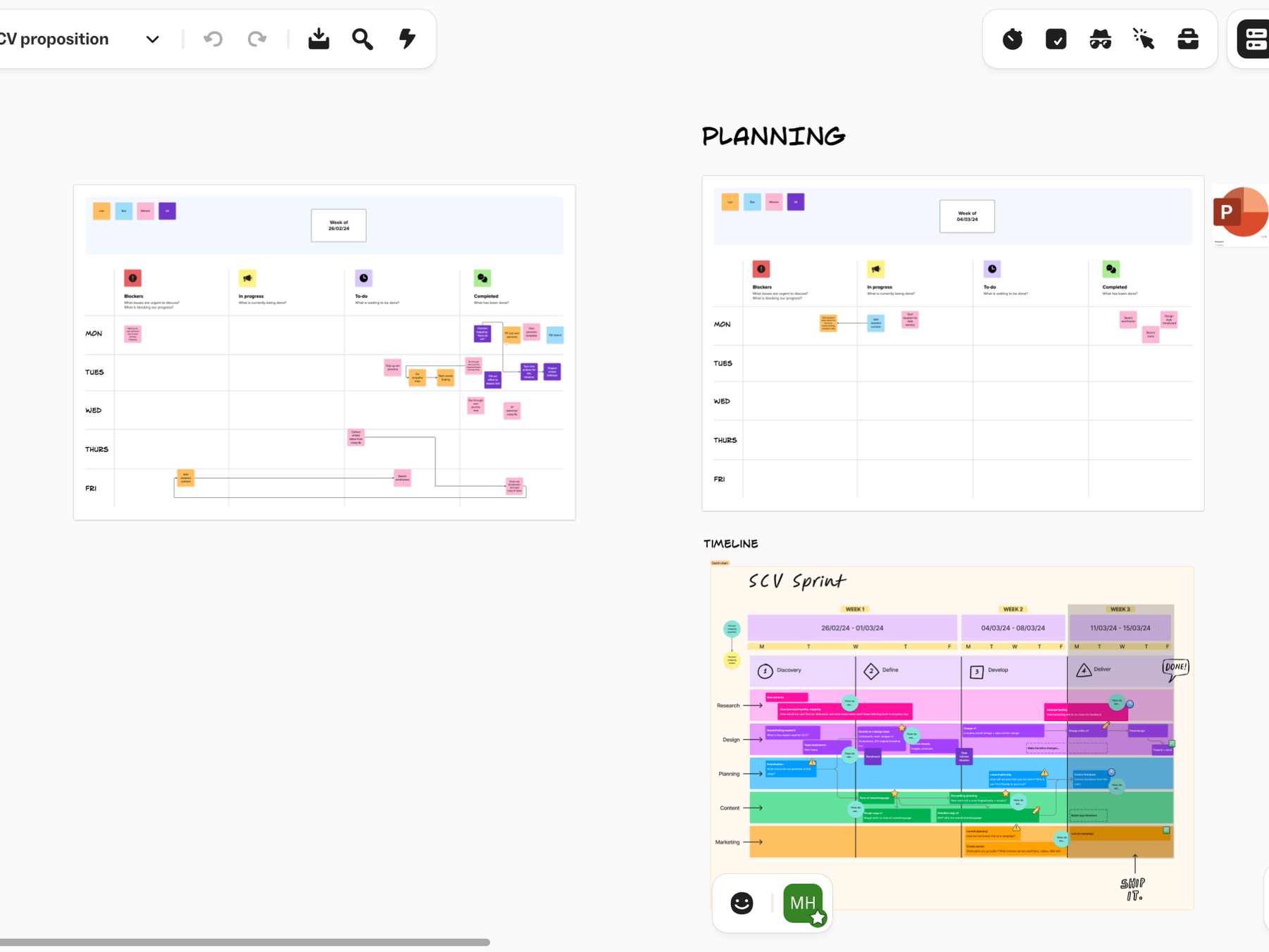
1. Planning (Kanban, horizon mapping)
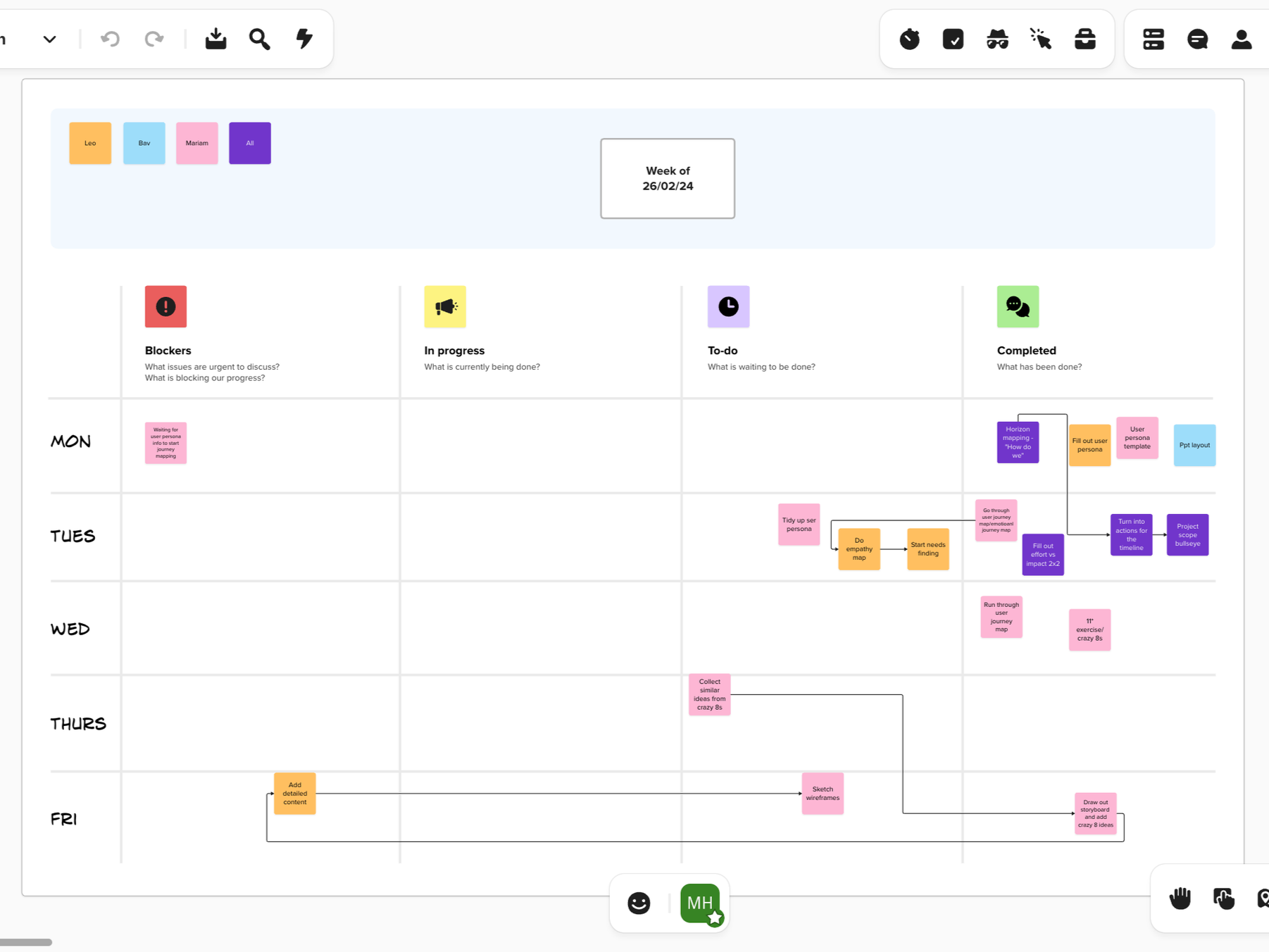
1.1 Planning - Kanban
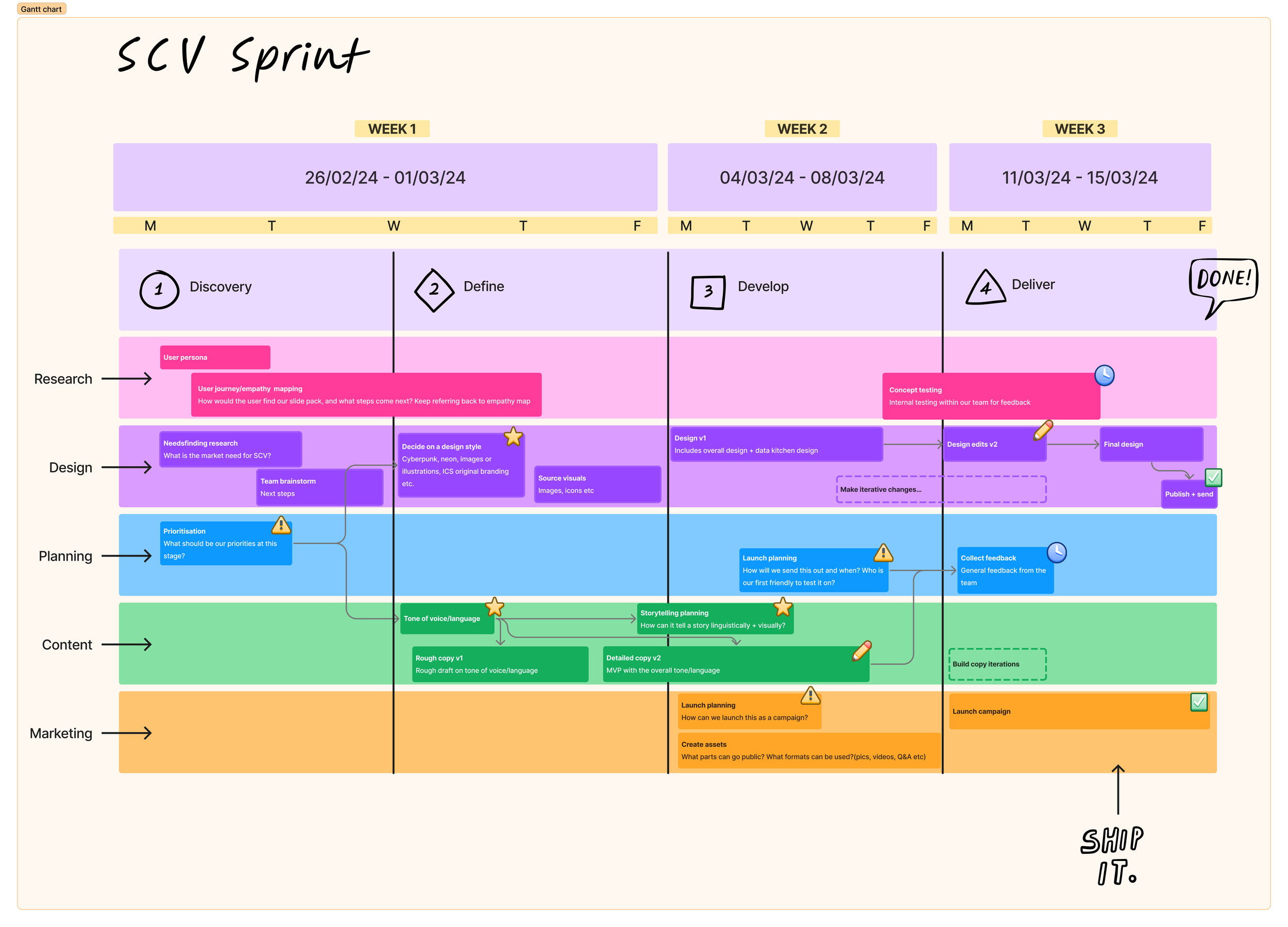
1.2 Planning - Horizon Mapping
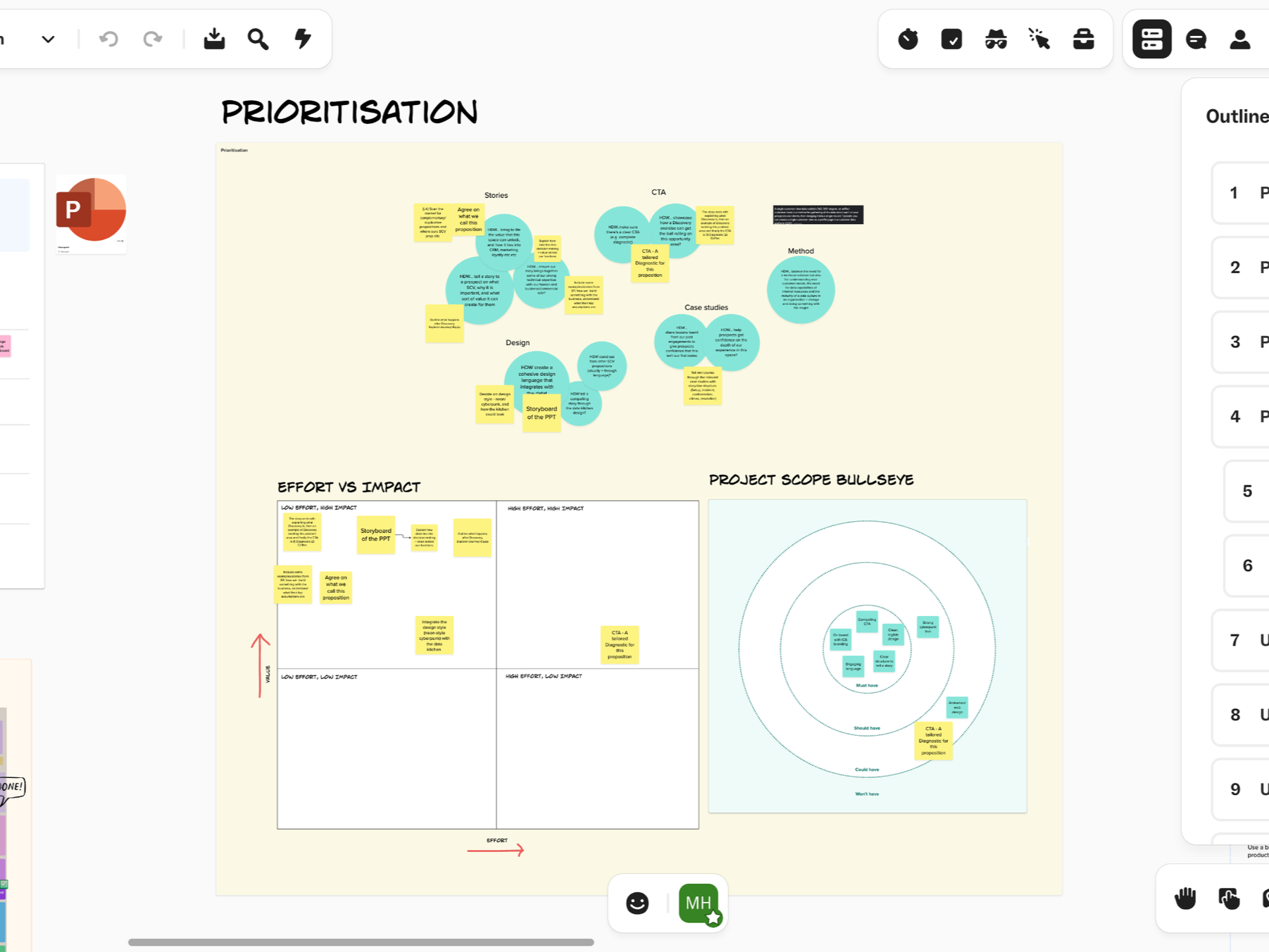
1.3. Planning - Prioritisation
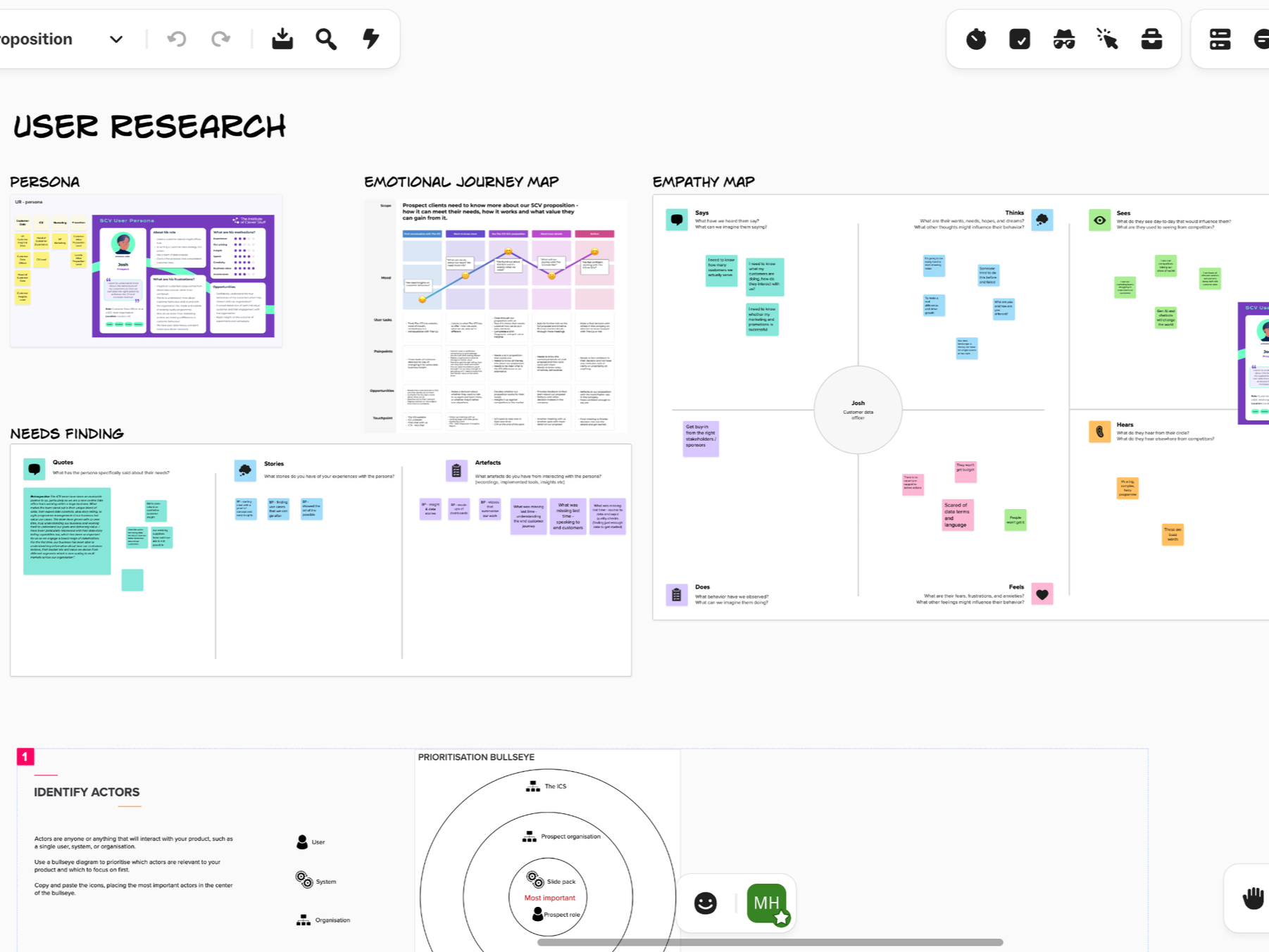
2. User Research (personas, emotional journey map, empathy map, needs finding, journey map)
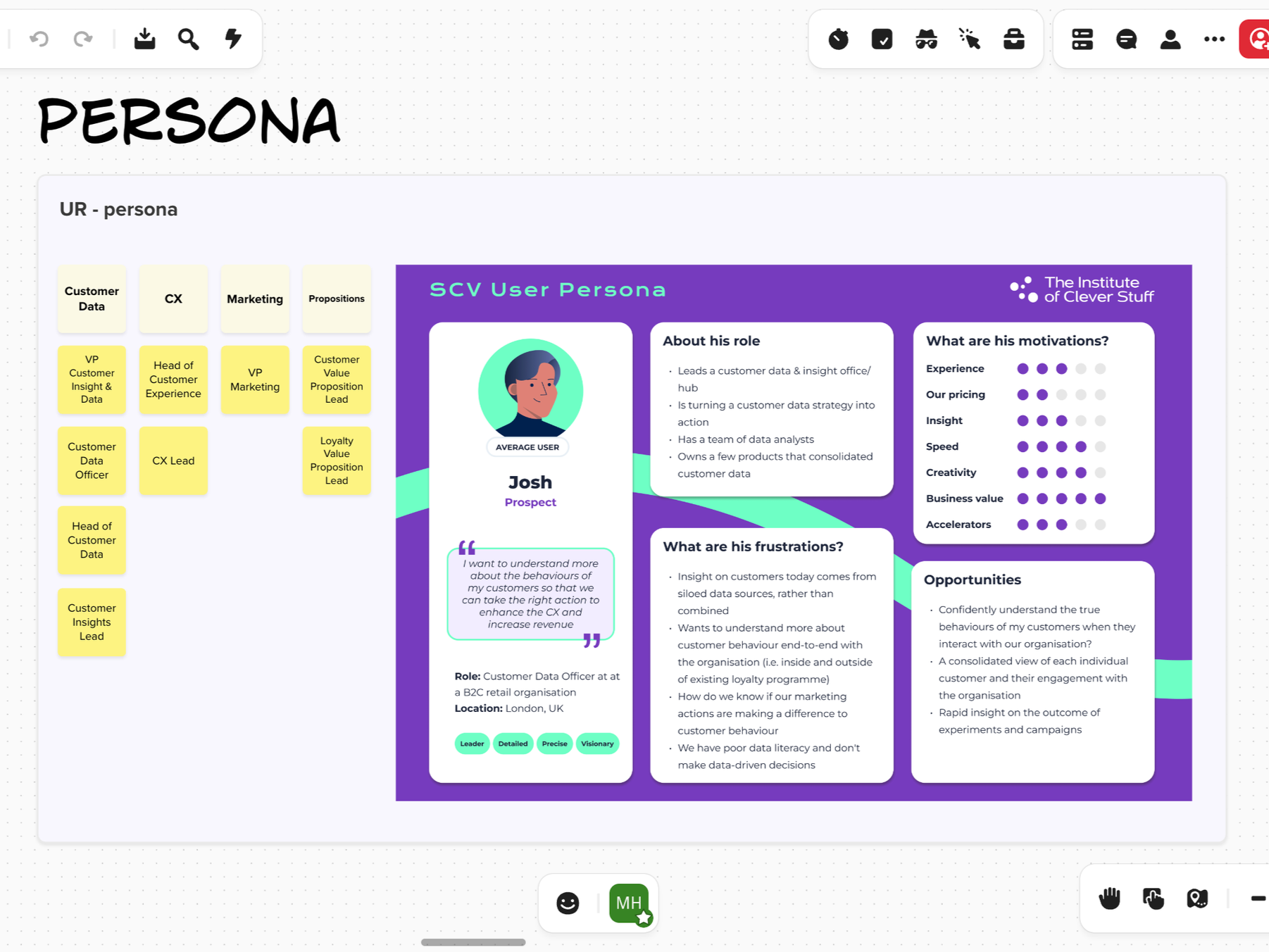
2.1 User Research - User Personas
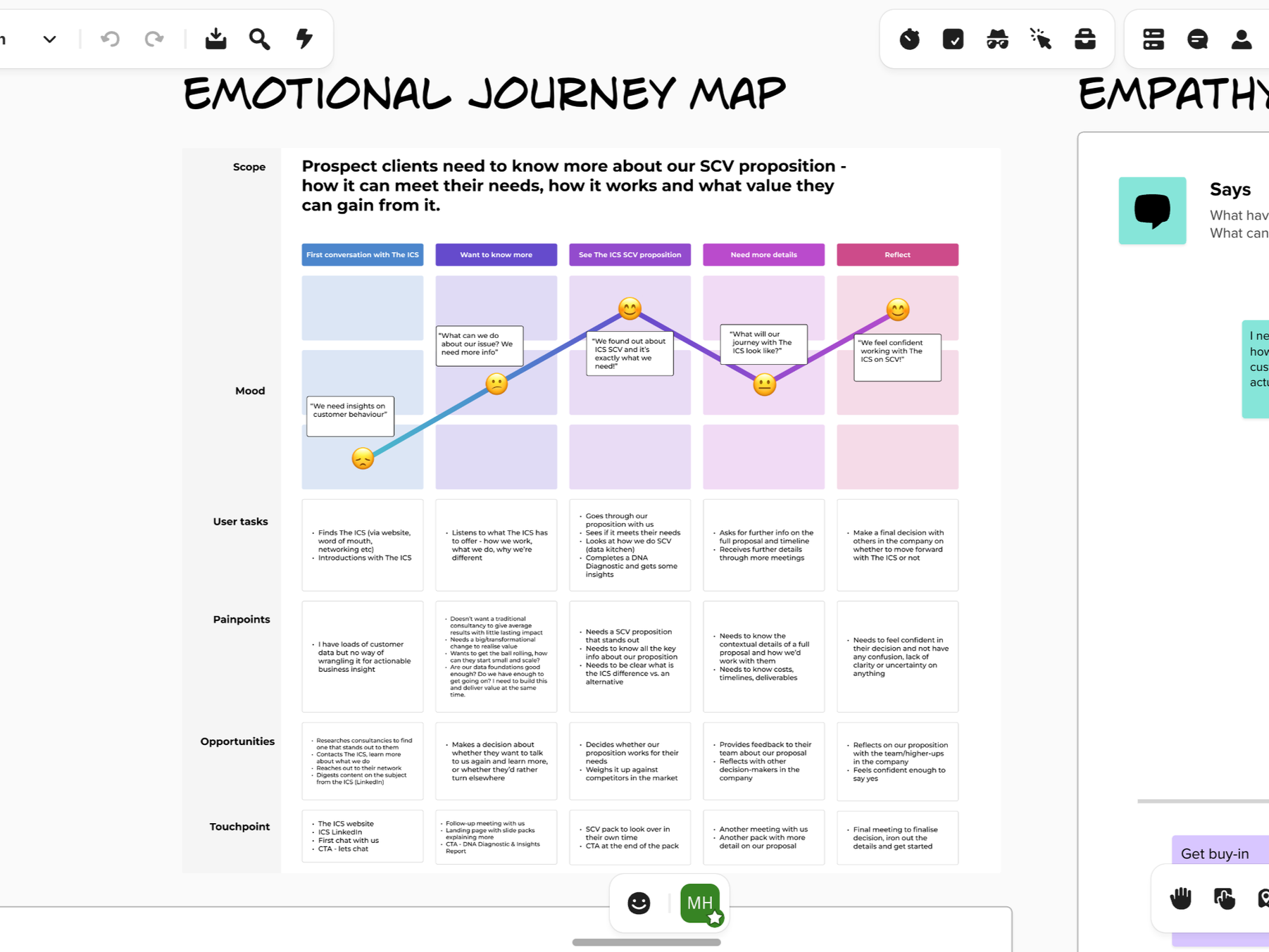
2.2 User Research - Emotional Journey Map
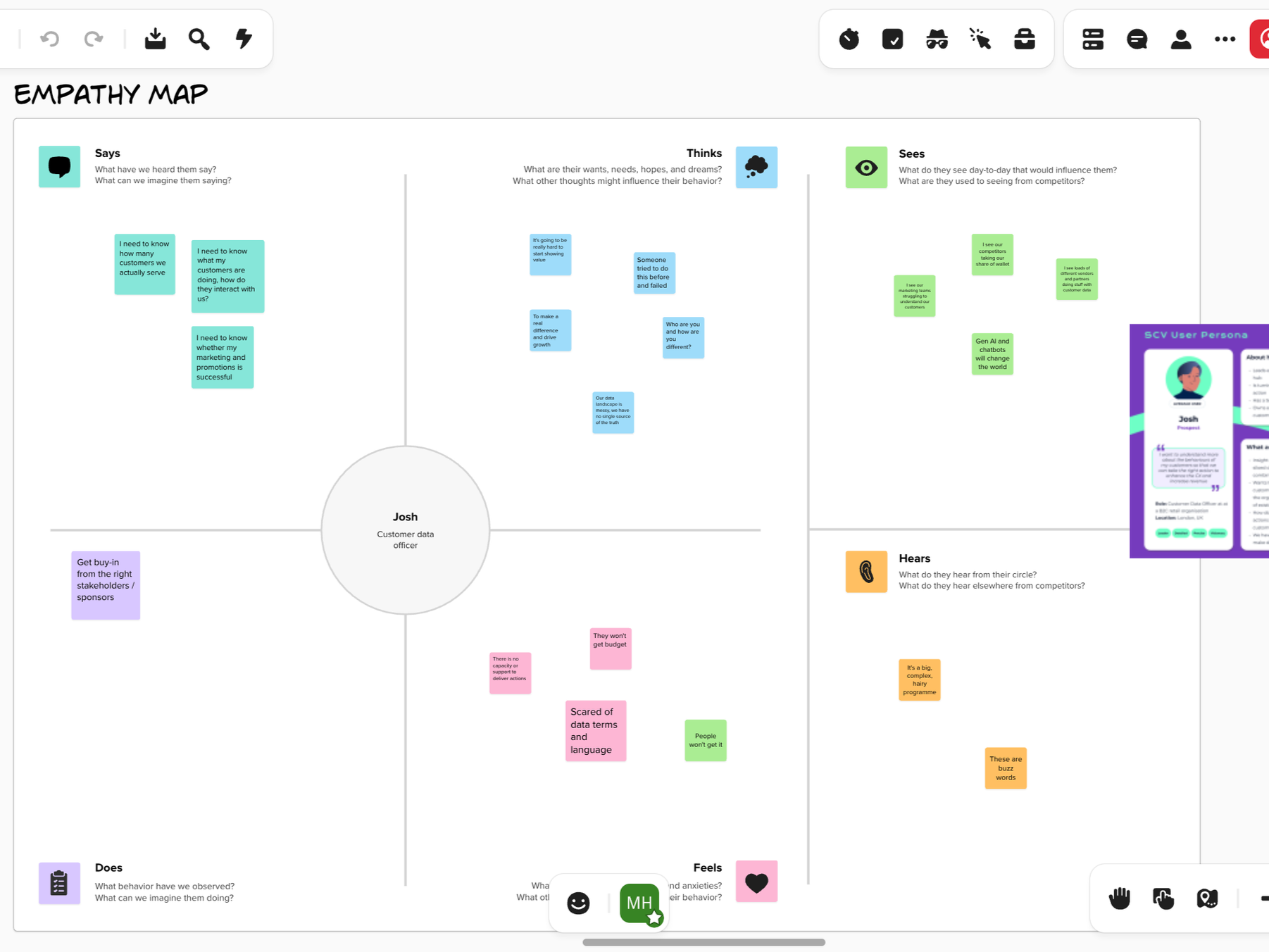
2.3 User Research - Empathy Map
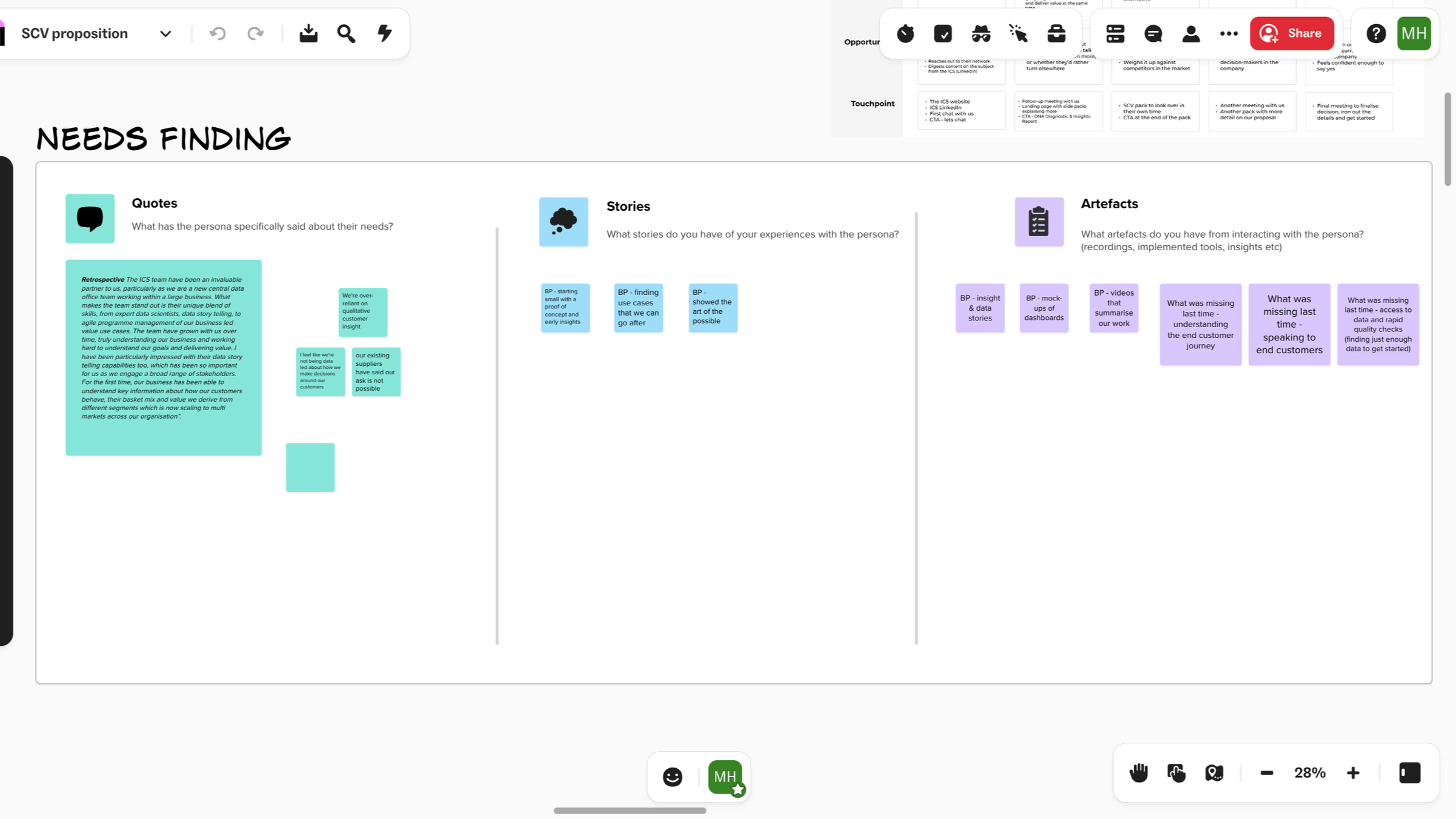
2.4 User Research - Needs Finding
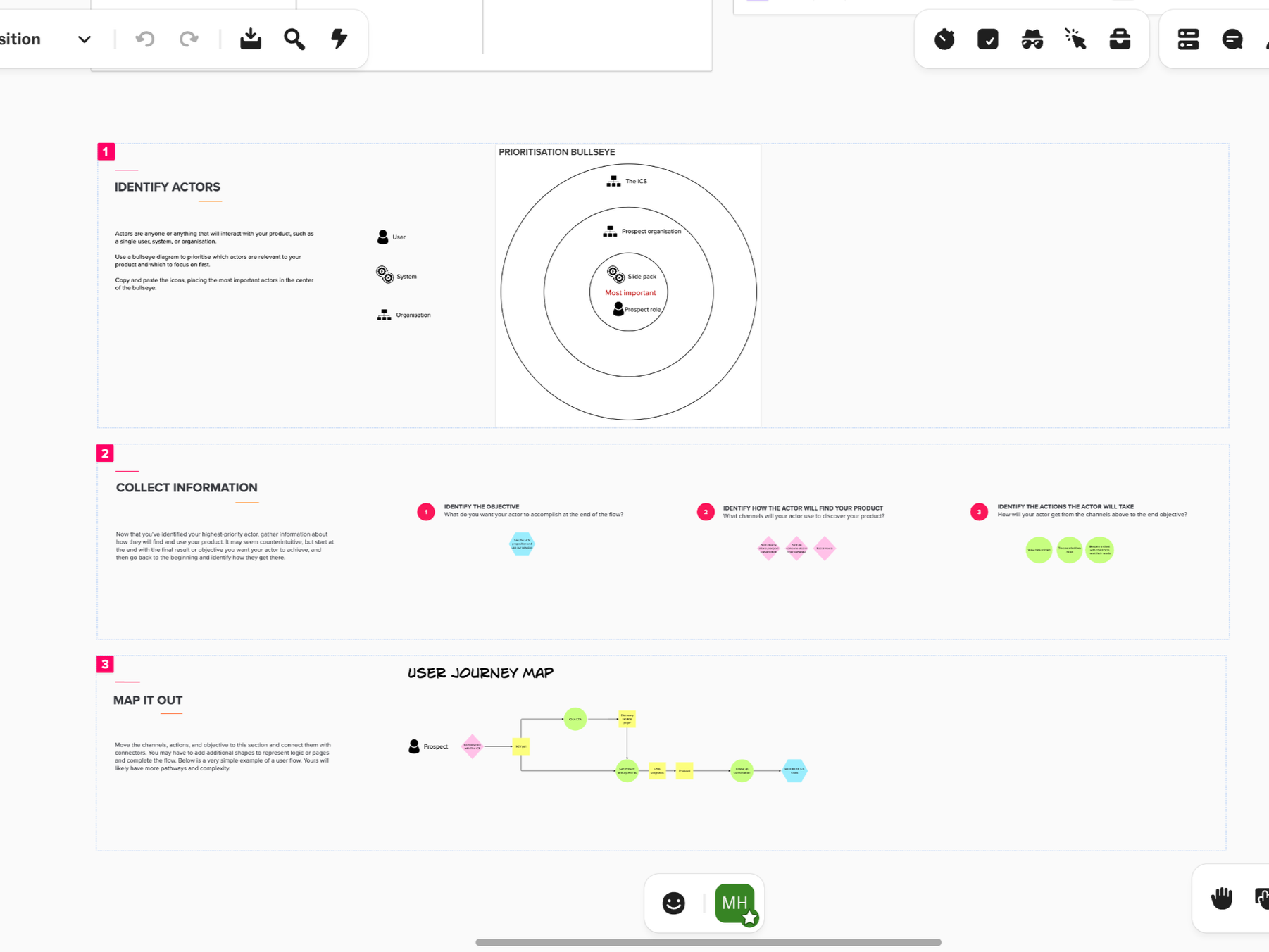
2.5. User Research - Journey Map
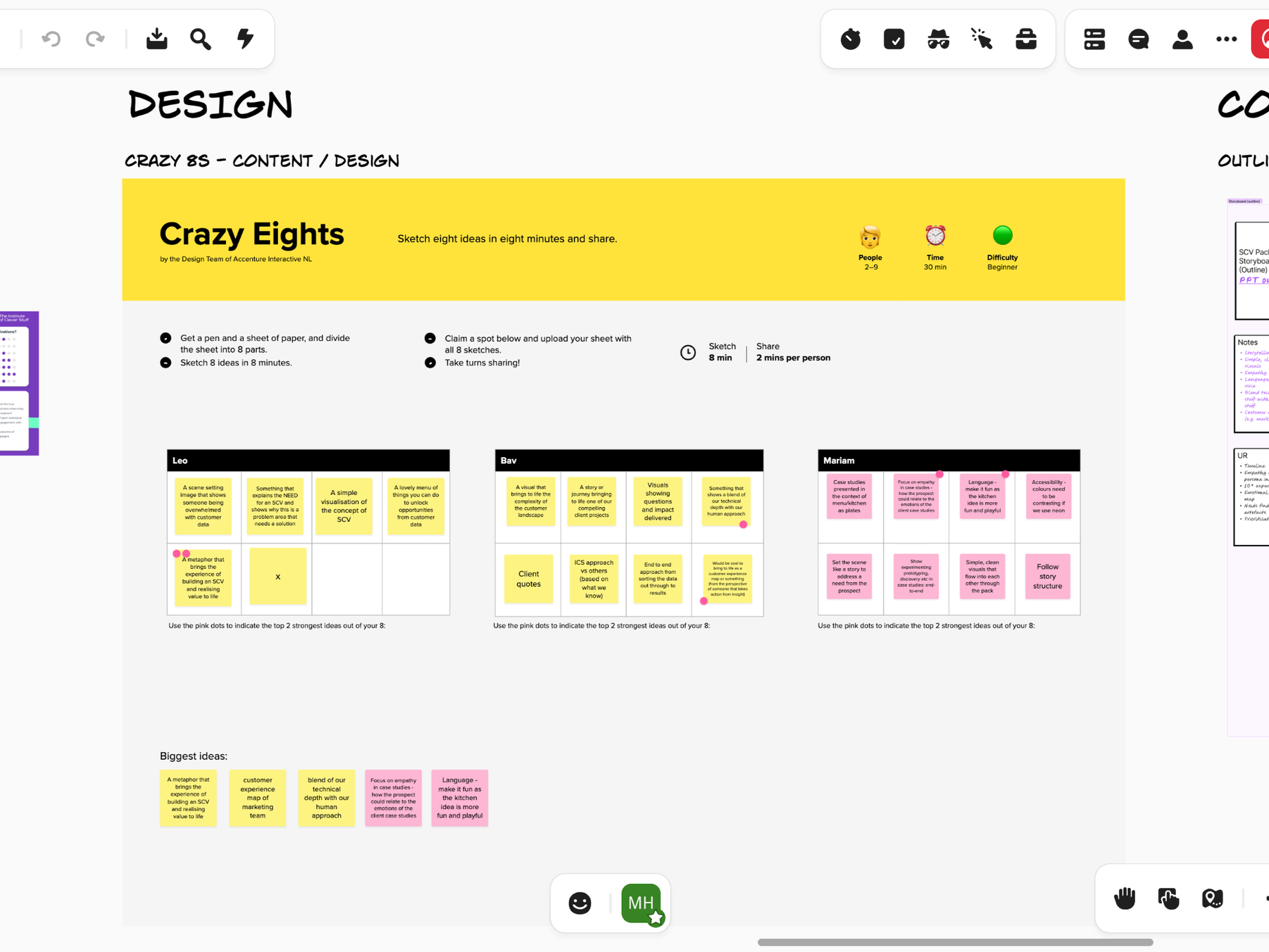
3. Design (crazy eights)
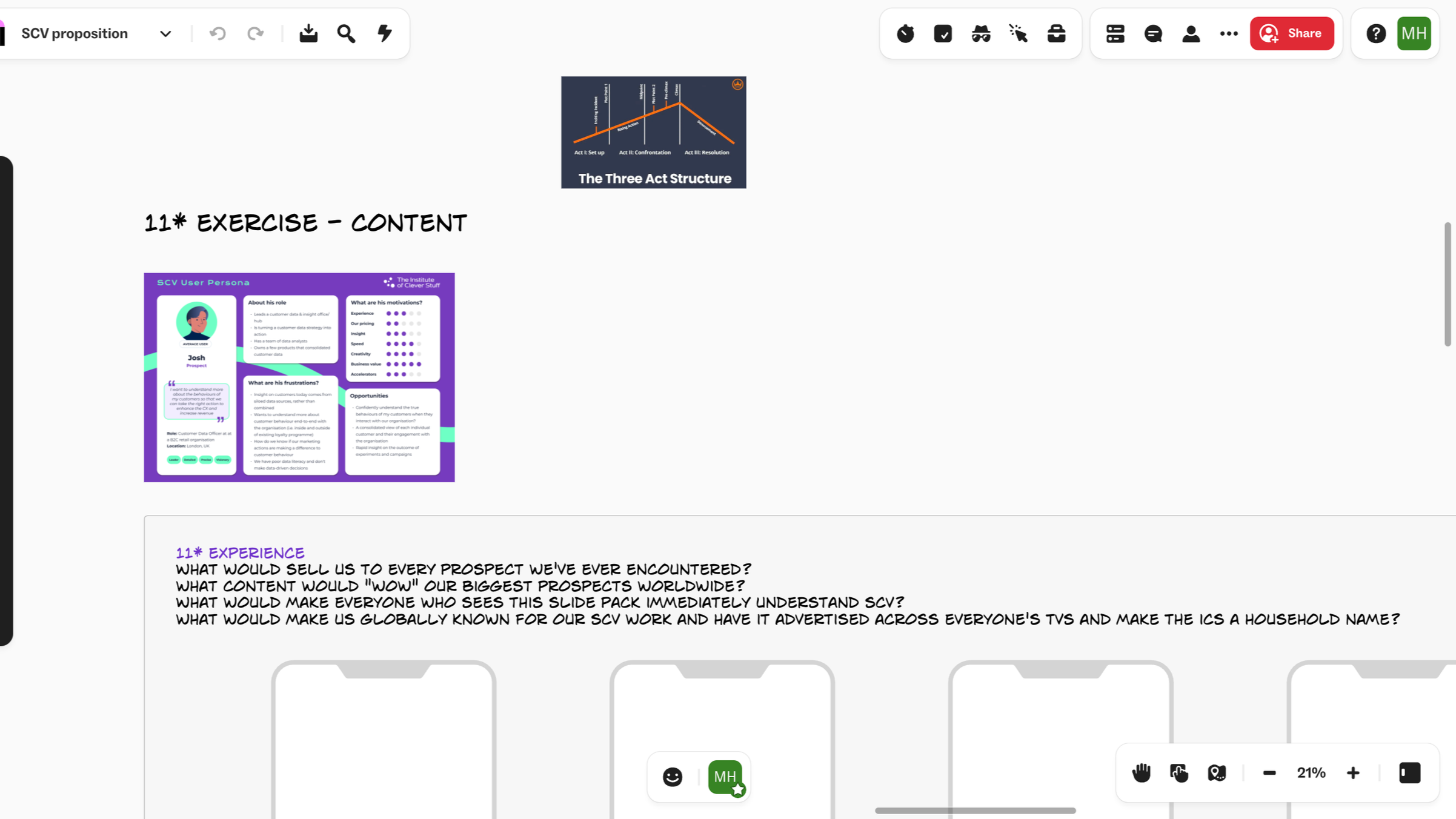
4. Content (11* exercise)
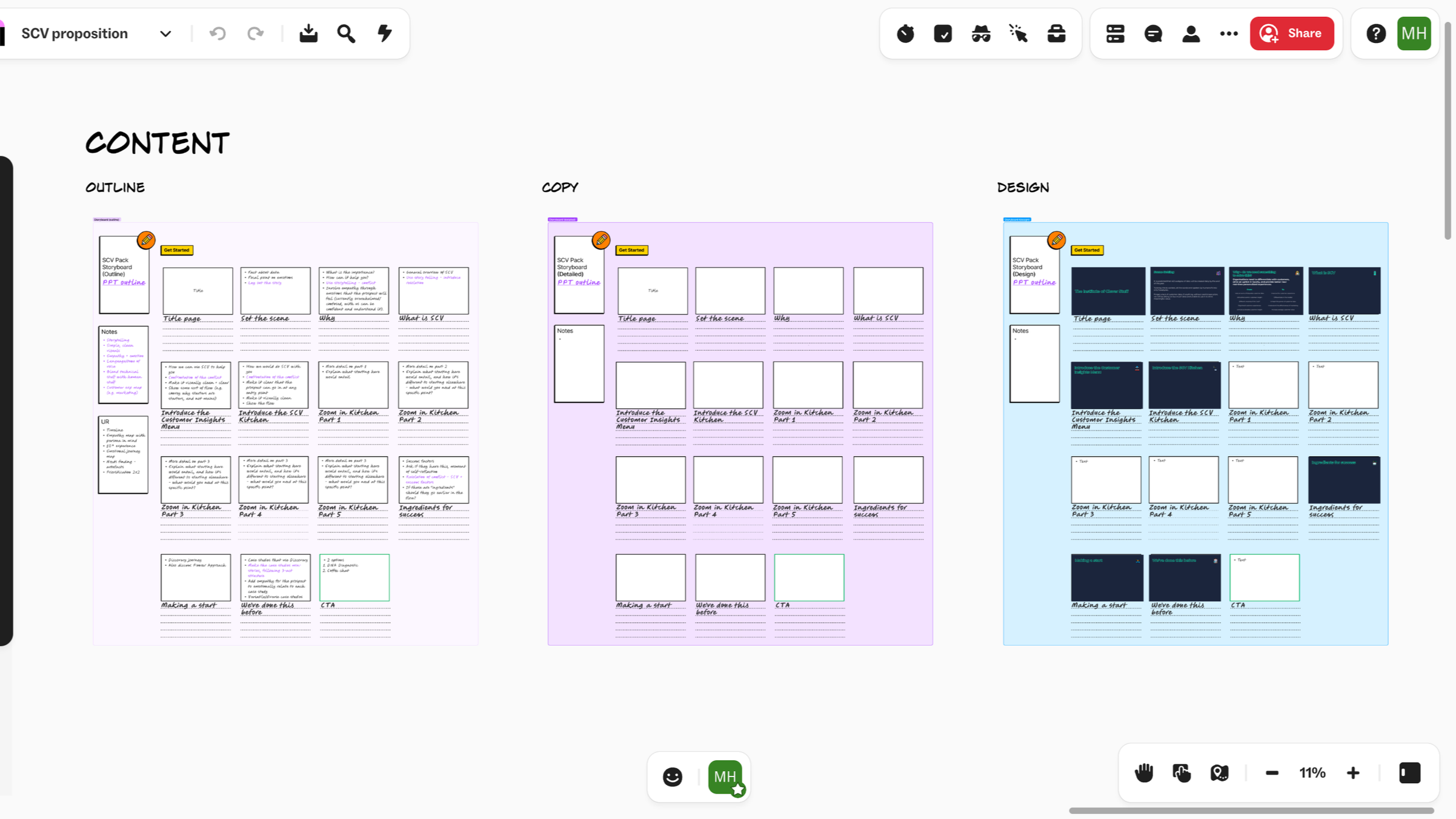
4.1. Content (storyboarding)
5. Validation
Testing the Concept
I tested the interactive prototype through structured user-testing sessions.
The testing process was split across two meetings, with participants first being introduced to the concept and then testing the design themselves. Feedback was collected through a questionnaire designed to capture genuine opinions and constructive improvements.
The sessions focused on understanding how users responded to the experience as well as identifying opportunities to improve the design.
Testing Beyond the Interface
Because GG EXP deals with a sensitive subject, I also considered the experience surrounding the testing itself.
Participants were provided with:
Background information about the project
A clear explanation of the testing process
Consent information
A content warning around discussions of online harassment
A feedback form
The opportunity to opt out
This helped ensure that the research process itself was considered as part of the UX.
Refining the Experience
Feedback from testing informed the development of the final prototype, particularly around how the different parts of GG EXP connected.
The final concept brought together:
In-game check-ins → Emotional reflection → Personal insights → Resources → Community
Rather than treating these as separate features, I designed them as interconnected routes through the overall experience.
6. Reflection
Designing for a Sensitive Problem
GG EXP taught me that designing for a complex social problem requires more than identifying a single pain point and designing a feature around it.
The research showed that harassment can affect confidence, participation and a person's sense of belonging. This pushed me to think about the wider experience surrounding the problem — including emotional support, reflection and community.
Designing Around Existing Behaviour
A key learning was the importance of designing around the user's existing behaviour rather than asking them to completely change it.
By positioning GG EXP alongside Steam, the concept could provide support within an environment users already understood, while still giving them reasons to explore the wider experience.
Research-Led Product Design
This project strengthened my ability to take a broad research topic, identify recurring user needs and turn those findings into a coherent product concept.
It also developed my skills in UX research, persona development, information architecture, interaction design, prototyping, visualisation and user testing.
Skills Demonstrated
UX Research · User Personas · Information Architecture · Interaction Design · User Flows · Wireframing · Prototyping · UI Design · Data Visualisation · User Testing · Accessibility · Product Thinking
One thing I'd change from the original deck
I wouldn't put every research artefact from the deck onto the portfolio page. There is a lot of genuinely good material in there, but the portfolio shouldn't become a presentation dump.
The strongest visual/story sequence for the webpage is:
Research themes → Personas → Key opportunity → Product architecture → Steam integration → “I'm Feeling…” → Stats → GG Space → Testing → Reflection
And I'd make the research statistics you actually have prominent where they support the story, rather than inventing percentages or claiming improvements that the deck doesn't evidence. That keeps this case study credible while still showing a substantial amount of UX work.